


Countess Elizabeth Bathory de Ecsed was a Hungarian Countess and alleged serial killer, who earned the monikers of Blood Countess and Countess Dracula after being accused of the torture and murders of up to 600 girls and young women throughout her kingdom between 1590 and 1610. But was Elizabeth really the monster she was purported to be?
Elizabeth was born in 1560 (7th August?) to Baron George VI Bathory de Ecsed and Baroness Anna Bathory, through her Mother’s bloodline she was niece to Stephen Bathory, the King of Poland, Grand Duke of Lithuania and Prince of Transylvania. Born into a privileged family of nobility she certainly benefitted from her prominent social rank, being endowed with great wealth and an excellent education, including learning four languages; Latin, German, Hungarian and Greek.

However, despite her privileged position, Elizabeth’s early years would not always be easy. During childhood she began to suffer from seizures that, whilst we cannot know for sure, are believed to have been caused by a form of epilepsy. Of course, the Bathory’s could afford to call on the most prominent medical practitioners of the time and she would be diagnosed with ‘falling sickness’. There were several treatments available to those who could pay for them but the one favoured by Elizabeth’s doctor called for the blood of a non-sufferer to be either rubbed upon the lips of the patient or ingested along with a piece of their skull as a seizure drew to it’s end. Some cite this ‘treatment’ as the beginning of Elizabeth’s obsession with blood, especially that of young girls.
As the daughter of a nobleman, Elizabeth’s upbringing and education was meticulously curated in order to prepare her for the most important role that a woman could attain in the late 1500’s; that of a wife. And, just a couple of months before her fifteenth birthday, on 8th May 1575, Elizabeth would fulfil this part of her duty to the family by marrying Count Ferenc II Nadasdy, whom she had been betrothed to when she was ten and he 15. Their marriage would secure both families even more land, and influence, in both Transylvania and the Kingdom of Hungary. The Count’s wedding gift to his new bride was his household in Little Carpathians, the Castle of Csejte, which included a ‘modest’ country house and seventeen surrounding villages. However, after the wedding Elizabeth would mainly reside in Nadasdy’s castle at Sarvar.
Sidenote; There are stories of Elizabeth falling pregnant by a young peasant boy when she was 13 years of age, it is said that her parents were horrified but probably not for the reasons that we would be today. It was the Father’s social standing that caused them to panic and whisk Elizabeth away from any prying eyes. They were very close to marrying her off to Nadasdy, if there had been even a slight whiff of this scandal the family’s reputation would be ruined and the Count [Ferenc] would be perfectly within his right to call off the wedding. Surprisingly, in this tale, both young Mother and baby survived the pregnancy and birth, and soon afterwards the child was given to a trusted local woman who allegedly raised it as her own. This supposed incident was not mentioned until many years after Elizabeth’s death and there was no recorded evidence, just rumours spread by the villagers who lived in the shadow of the Castle of Csejte and it’s horrifying legend.
At the time of their marriage Hungary was at war with the Ottoman Empire and, due to his position in the Hungarian army, Ferenc spent much time away from his new wife and their home. This meant it fell to Elizabeth to manage all business affairs and keep their multiple estates running and profitable. When the Count became the Chief Commander of the Hungarian troops in 1578 she would take on even more responsibility; at just 18 years old the young Countess took charge of the defence of those estates plus the protection and care of the Hungarian and Slovak people who resided within them. During this time Elizabeth also became well-known amongst the women of her kingdom, the Countess would often personally come to the aid of ‘destitute women’, including a woman whose husband was a prisoner of the Ottoman’s and a woman whose daughter had been raped by Ottoman soldiers and had become pregnant. Reading these accounts of Elizabeth’s acts during the Long War it seems hard to believe the crimes she would later be charged with.
Their first child was born in 1585, ten years after their wedding day; it is believed that this was due to the amount of time Ferenc would spend away from his family home. In the years following the birth of their first child, a daughter named Anna, Elizabeth would go on to have four more children; Orsolya [Orsika], Katalin [Kata or Katherina], Andras and Pal [Paul].
Then in 1601 Ferenc fell ill, it is unclear what the nature of this illness was but it began with what is described as a debilitating pain in his legs. Soon this mysterious affliction prevented the once legendary soldier from going to battle, over the next two years it would worsen and eventually see him permanently bedridden. He passed away on January 4th 1604 at the age of 48, leaving his estates to his widow and their children, but entrusted to his old friend Gyorgy Thurzo, a powerful Hungarian nobleman who fought alongside Ferenc in the Ottoman war. Ironically, Thurzo would be the man to eventually lead the investigation into Elizabeth’s supposed crimes.
Now, if all rumours are to be believed the Countess Bathory had begun her torture/murder spree in 1590. Around what time she began to frequent Castle Csejte more often is unclear, however we know the castle and villages were plundered by Ottoman soldiers at least once which may have driven her to become more of a presence during the war. We are told that this is where Elizabeth allegedly carried out all of her crimes, perhaps feeling more secure in a household that was solely under her rule, and we also are led to believe that Ferenc spent time there when he returned from various battles. It is said that her husband was aware of what she was getting up to whilst he was away and, upon his infrequent returns, would sometimes join her in Castle Csejte’s dungeons. However, when her husband was home Elizabeth supposedly ‘toned things down’ and he was unaware of many of the horrors she inflicted upon her victims.
Sidenote; Elizabeth was not the only half of the couple to be associated with an unpleasant moniker. Ferenc would become known as the Black Knight of Hungary, famous for his great courage in battle and his extreme cruelty towards Ottoman prisoners.
Interestingly, and despite Elizabeth having supposedly been a prolific serial killer since 1590, it would not be until 1602 that rumours began to spread about the atrocities happening at her residence. This would be around the time that Ferenc’s illness would be worsening and, perhaps smelling blood in the water, sharks began to circle. Or, of course, people had just been too scared of the Blood Countess and her Black Knight, but with one showing signs of not being around for too much longer they could well may be feeling emboldened. Following the Count’s death two years later the rumours began to escalate but they would not be investigated for another six years.
It is the supposed disappearance of a nobleman’s daughter that finally brought attention from the Court of Vienna, who had apparently been ignoring all the rumours about the peasants going missing. In early 1610, as the trustee of the Bathory estates and Palatine of Hungary, Gyorgy Thurzo was instructed by King Matthias II to investigate Elizabeth and her alleged crimes. He (Thurzo) ordered two of his most trusted notaries, Andras Keresztury and Mozes Cziraky, to seek out evidence pertaining to the complaints made about the Countess and, by October 1610, they had collected 52 witness statements. A number which would rise to over 300 within another year.
Political etiquette saw the King and Thurzo reach out to Nikola VI Zrinski, Elizabeth’s son-in-law with her eldest daughter Anna, to discuss the investigation and negotiate the eventual outcome of it. On December 13th 1612 an agreement was reached between the two parties pertaining to the imprisonment of the Countess and distribution of her estates. It would be on the 31st of that same month that Thurzo would enter the Castle of Csejte and arrest Elizabeth, along with four of her servants; Dorotya Semtesz, Ilona Jo, Katarina Benicka and Janos Ujavry. They would be accused of being her accomplices and would suffer terrible torture to extract their confessions, records tell of Ilona and Dorotya having fingers torn off with hot pokers. Once the interrogators had the information that they wanted three of the four were executed, Ilona and Dorotya were burned alive and Janos, due to his young age, was given the ‘less painful death’ of beheading. After evidence was produced that Katarina had been abused by the other women she was sentenced to life imprisonment.
Elizabeth’s punishment was a more complicated matter given her family’s wealth and social position, not only did her family have Royal ties but her children had risen to extremely powerful positions and married into powerful families. The original agreement between her family and Thurzo had decided upon Elizabeth being sent to a nunnery but, with the frenzy surrounding the trial and the manner of the crimes, this option was no longer viable. Eventually negotiations led to the confinement of Countess Elizabeth Bathory to a room in her castle for the remainder of her life.
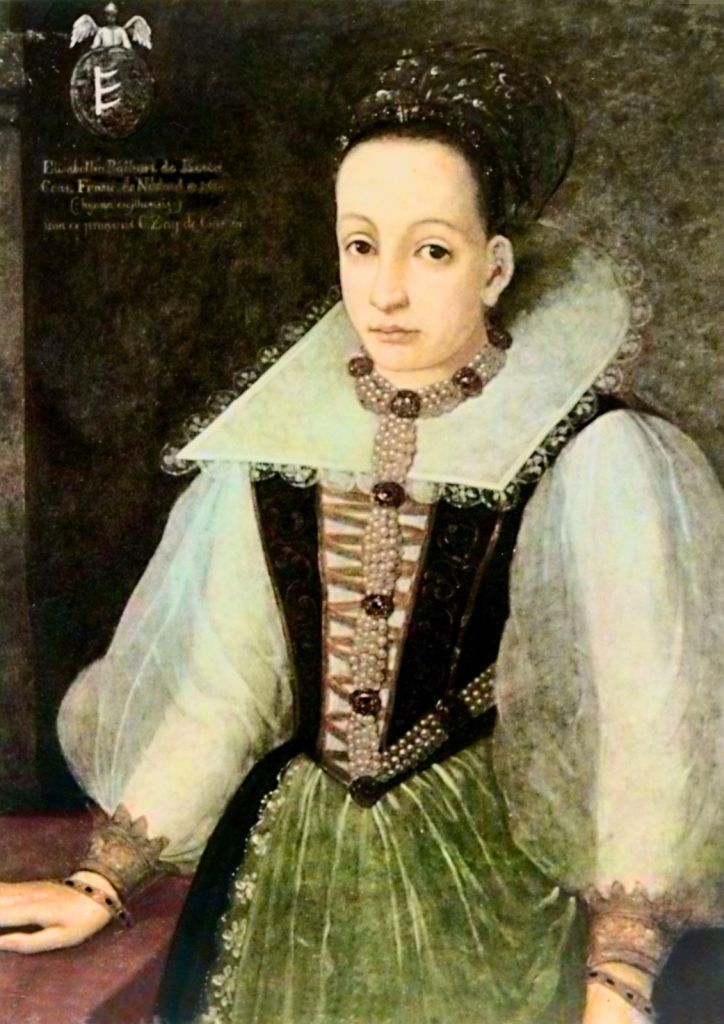
So, what crimes could have led to the torture and execution of the poor servants and the lifelong imprisonment of a powerful noblewoman in a time when if you had enough influence and wealth you could do pretty much whatever you wanted?
Countess Elizabeth Bathory was accused of torturing and murdering over 600 girls and young women over a 20 year span. There are stories of a dungeon fitted with devices capable of inflicting unimaginable pain, some designed by Elizabeth herself; the draining of blood along with blood drinking and bathing, infliction of terrible wounds that were allowed to become infected, needles under fingernails, removal of extremities, burning, flaying and extreme forms of rape. If these tales are true it is without doubt that the Blood Countess escaped with the lightest of sentences and surely deserves her place in the darkest corners of our history.
However, some historians and authors argue that she was ‘set up’. The basis of these theories being largely political; after her husband’s death Elizabeth’s already substantial wealth increased and his willed lands, combined with hers, meant that she owned great swathes of Hungary. The country at this time was in religious and political turmoil, especially in matters relating to the Ottoman War and the spread of Protestantism. King Matthias II would not only be feeling pressure when it came to his throne but he was also in debt to Elizabeth financially, by quite a large amount.
When it comes to the evidence produced throughout the two trials, held on January 2nd 1611 and January 7th 1611, it relies heavily on local hearsay and statements made by Gyorgy Thurzo about what he found upon entering her castle. Thurzo speaks of catching Elizabeth ‘red-handed’, covered in blood and torturing a girl in her dungeon, before discovering many more victims who were either dead or dying throughout the castle and it’s grounds. However, it is believed that she was actually eating dinner when the knock on the door came and none of the ‘survivors’ were asked to speak at court. It is even suggested that Thurzo used patients suffering from other ailments and wounded soldiers to ‘show’ the court the extent of Elizabeth’s cruelty. Additionally, there are no written documents of complaint against Elizabeth until the singular one that sparked the investigation. During this time in history ‘complaints’ were commonplace; this is where, whatever your social standing, you were able to go to the courts for anything from being physically harmed to someone stealing your chicken. [Of course, we could return to our theory of fear throughout the local population to explain the lack of records involving Elizabeth]
Guilty or not, Countess Elizabeth Bathory would be confined to her castle on 31st December 1612 and remain there until she passed away on 21st August 1614 aged 54. Some say that, despite the terms of her punishment, she would be allowed to move freely about the castle before being locked away at night. Whether this happened on 20th August 1614 we do not know, but it is on this evening that Elizabeth would call to her guard that she was feeling cold, to which he would reply ‘it’s nothing Mistress. Just go lie down’. According to records she did indeed fall asleep that night and was found dead the next morning.
So, we return to our original question… was Countess Elizabeth Bathory one of the worst female serial killers in history or has her story been rewritten by the men who shared out her wealth and lands?
Mystery of the Mary Celeste
In October 1872, Captain Benjamin Briggs was busy preparing for his maiden voyage on board the newly refitted…
Keep reading
Christine Ida Collins
When her son, Walter, failed to return home on March 10th, 1928, after taking a trip to the…
Keep reading
The Curse of King Tut’s Tomb
Ta-sekhet-ma’at, translating to ‘The Great Field’, is known to us today as the Valley of the Kings. Here,…
Keep readingSomething went wrong. Please refresh the page and/or try again.
 Law & Lore Archives
Leave a comment